comparison
OUPV Six Pack vs Master 100 Ton: Which License Your Charter Needs
Six passengers or twenty seven, uninspected hull or inspected Subchapter T, inland or near coastal. The two credentials rest on different sea service, tonnage and vessel rules, and the choice sets your ceiling for years.
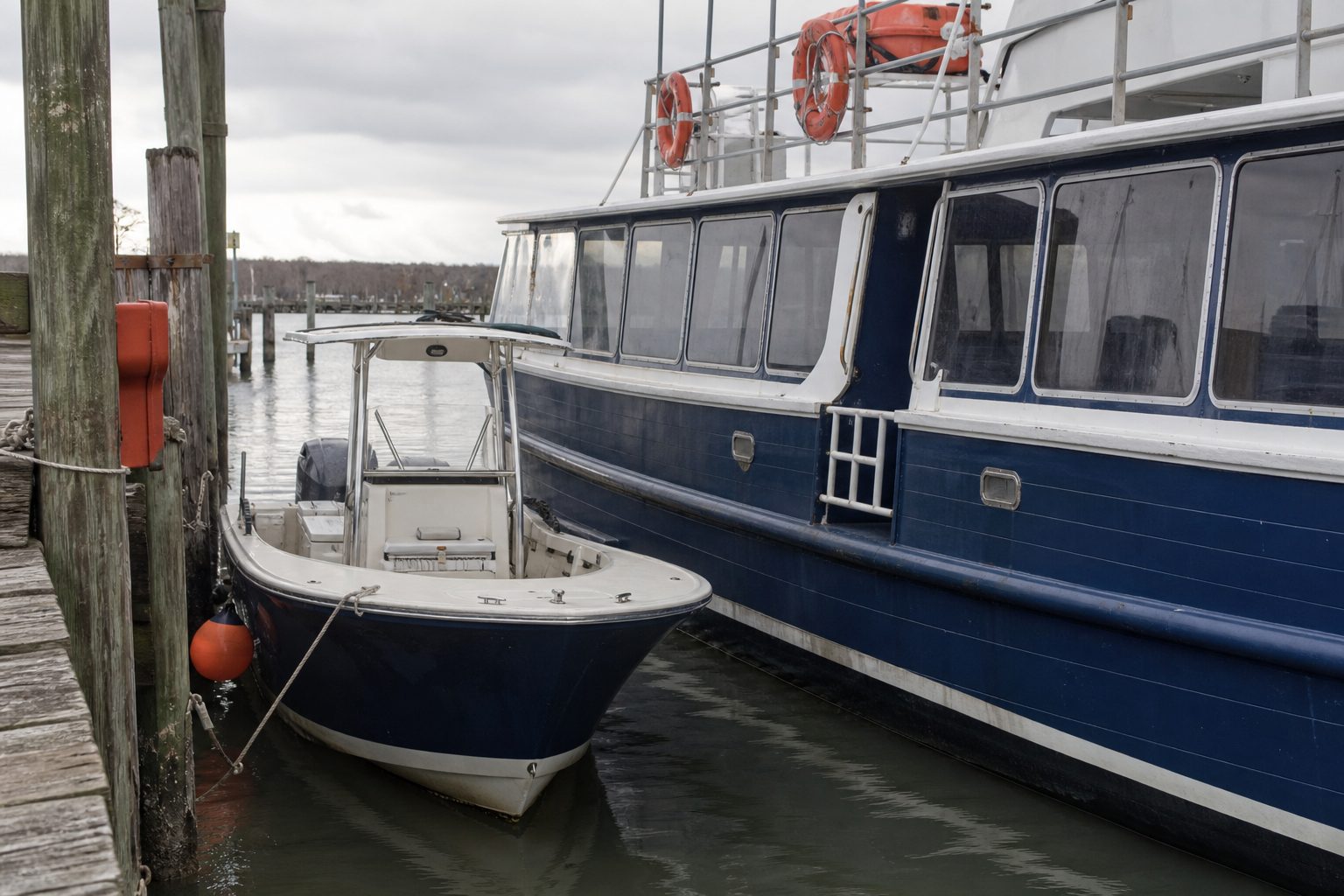
Where the six passenger ceiling comes from
The six passenger limit for many charter boats traces back to federal regulations for uninspected passenger vessels. Commonly called the "Six Pack" rule, this ceiling is set by the U.S. Coast Guard and applies to boats carrying no more than six paying passengers, plus crew. The official term for this license is Operator of Uninspected Passenger Vessels, or OUPV.
This six passenger threshold is not arbitrary. It comes from marine safety laws intended to balance oversight and practicality for small commercial operations. When a vessel carries more than six passengers for hire, it crosses into a different regulatory category, requiring a higher level of inspection and a different license.
For most small charter fishing operations and sightseeing tours, the OUPV Six Pack license is where they start. It allows the operator to run trips on boats that do not have a Coast Guard Certificate of Inspection, as long as they stay under the six passenger cap. Once you want to carry more people, or operate a larger vessel, the Master license comes into play.
Keep reading: Charter Boat Insurance Mistakes: Crew, Passengers and Named Operators
Sea service days, tonnage and how each is documented
Understanding sea service days
To qualify for either the OUPV or Master licenses, you must prove a minimum number of days spent working or crewing on a vessel. The Coast Guard defines a day as at least four hours underway. For the OUPV, the requirement is at least 360 days of sea service, with at least 90 days in the last three years.
The Master 100 Ton license takes it up a notch. The baseline is 360 days for basic Master, but to get the full 100 ton rating and operate on near coastal routes, you need at least 720 days, with 90 days in the past three years. The tonnage rating is based on the size of boats you have worked on in your documented service, not the size you want to operate.
How to document your days
Applicants use Coast Guard form CG-719S, the Small Vessel Sea Service form. Each period of service should be signed by the owner or operator of the vessel. If you own your boat, you can self-sign, but you may be asked for backup, such as maintenance logs, fuel receipts, or even photos. For time on inspected vessels or as a working mariner, official discharge papers or company letters are common.
The Coast Guard checks for consistency and reasonableness. Gaps, overlaps, or vague records can slow the process. Applicants who work in seasonal fisheries or run seasonal tours often submit multiple forms to cover different periods and boats.
Tonnage matters
Tonnage, in this context, is not about weight but about internal volume. The OUPV does not restrict vessel size by tonnage, as long as the boat is uninspected and under six passengers. For the Master license, the tonnage you qualify for, 25, 50, or 100 gross tons, depends on the size of boats you worked on in your sea service. If most of your time was on vessels under 20 gross tons, your Master license will be limited to 25 or 50 gross tons. To get a 100 ton Master license, you must document at least 180 days on vessels over 34 gross tons.
Uninspected passenger vessels versus an inspected Subchapter T boat
What is an uninspected passenger vessel?
The vast majority of small charter fishing boats and bay tour boats are uninspected under federal law. This does not mean unsafe. It means the boat is not required to hold a Certificate of Inspection from the Coast Guard and must carry no more than six passengers for hire. The OUPV Six Pack license covers these vessels.
Uninspected boats must still meet certain requirements: life jackets, fire extinguishers, sound signals, navigation lights, and compliance with state and federal rules. The main difference is that inspection is less formal and does not involve regular Coast Guard surveys.
What is an inspected vessel under Subchapter T?
A vessel carrying more than six passengers for hire, or a vessel carrying at least one passenger for hire on a boat of more than 100 gross tons, must be inspected. The most common category is Subchapter T, which covers small passenger vessels under 100 gross tons carrying up to 150 passengers, or up to 49 overnight passengers.
Subchapter T vessels are subject to annual Coast Guard inspections, more stringent construction standards, and more detailed safety equipment requirements. They must have a Certificate of Inspection, which is posted on board. The captain must hold a Master license, not just an OUPV.
Operating an uninspected boat as an inspected one, or exceeding the six passenger limit, can bring heavy fines and even criminal penalties. For headboats, tour boats, and ferries, the Master license and Subchapter T inspection are mandatory.
Keep reading: Federal For Hire Permits and Reporting for Gulf and Atlantic Charters
Route endorsements: inland, Great Lakes and near coastal
Where you plan to operate matters as much as vessel size and number of passengers. Both OUPV and Master licenses come with a route endorsement: inland, Great Lakes, or near coastal. The "inland" endorsement covers rivers, bays, and lakes inside the demarcation line. "Near coastal" extends up to 100 nautical miles offshore.
The route you qualify for is based on your sea service history. If your documented days are all in bays and rivers, you will be endorsed for inland routes only. If you have at least 90 of your sea service days on the ocean or in waters designated as near coastal, you may qualify for a near coastal endorsement.
The Great Lakes have their own category due to the unique navigation and weather conditions. To get a Great Lakes endorsement, you must document at least 90 days on those waters. A captain who wants maximum flexibility often aims for the near coastal endorsement, but many charter operations do fine with an inland credential.
Medical certificate, TWIC and drug testing program enrollment
Medical certificate
Both OUPV and Master applicants must hold a valid Merchant Mariner Medical Certificate. This involves a physical exam using form CG-719K. The exam covers vision, hearing, blood pressure, and overall fitness to ensure you can safely operate a vessel. The certificate is good for two years, then needs renewal.
TWIC card
The Transportation Worker Identification Credential, or TWIC, is required for all new and renewing mariner credentials. The process involves a background check and fingerprinting at a TSA enrollment center. Some remote operators may not need the physical card for daily work, but you cannot get your captain's license without it.
Drug testing program
To operate legally, you must enroll in an approved random drug testing program. Many marine employers manage their own programs, but independent captains can join a consortium. Proof of compliance is required at application and must be kept up to date. Failing to enroll, or failing a test, is grounds for suspension or revocation of your credential.
See how TransomBooking handles this for charter fishing and marine tourism
Renewal, upgrade paths and what each credential costs over five years
Renewal timelines and requirements
Both OUPV and Master licenses are valid for five years. Renewal requires showing continuing fitness, proof of participation in a random drug testing program, and recent sea service, at least 360 days over the past five years. If you do not have enough recent time, you may need to retake the exam.
Renewal is less involved than the original application but still requires paperwork and proof. Most captains set reminders a year in advance to gather documents and schedule their medical exam.
Upgrade paths
Many operators start with an OUPV and work up to a Master license as their business grows. Upgrading requires submitting additional sea service and, in some cases, retaking the license exam with more material on navigation and vessel stability. Operators who want to move from inland to near coastal endorsements, or increase their tonnage limit, must show qualifying sea service in those categories.
A Master license is more flexible. It opens doors to more types of work, including running inspected passenger vessels, ferries, and larger tour boats. Some captains hold both OUPV and Master licenses, depending on the boats they run.
The five-year cost of each credential
Costs break down into application fees, exam fees, medical exams, TWIC enrollment, and drug testing program membership. For an OUPV, expect to pay for your TWIC card enrollment, physical exam, drug testing consortium, and the Coast Guard application fee. Master license applicants pay the same types of fees, but may have higher exam costs and, if moving to inspected vessels, costs for vessel inspection and compliance.
Over five years, the biggest hidden costs are time and paperwork. Missed renewals or incomplete documentation can mean lost work or needing to retake exams. Drug testing and medical certificate renewals are recurring, not one-time costs. For captains running more than one boat or route, it pays to keep a checklist and calendar for all required renewals.
Which credential fits a bay tour, an offshore charter or a headboat
Bay tours and small fishing charters
For bay tours and casual fishing trips with six or fewer passengers, the OUPV Six Pack license is the most common route. It allows flexibility for owners of small center consoles or pontoon boats. Many inland tour operators start here, especially when building a client base or operating seasonally.
Offshore charters
If you want to run offshore trips, the key question is where you operate and how many people you carry. For near coastal trips with six or fewer passengers, an OUPV with a near coastal endorsement is enough. If you want to carry more passengers, or run a larger vessel, you must move to a Master license and an inspected boat.
Many captains start with OUPV, then upgrade to Master as their business expands to bigger boats and more clients. If you want to offer offshore trips out to 100 miles, check that your sea service qualifies for the near coastal route and that your tonnage rating matches your intended vessel.
Headboats and party boats
Headboats and party boats carrying more than six passengers are in a different league. These boats must be inspected under Subchapter T and require a captain with a Master license. This is true even if the boat rarely sails full. The Coast Guard checks for compliance, especially at busy docks and harbors serving tourists.
Operating a headboat with only an OUPV license is not allowed, no matter how many passengers are aboard on a slow day. The regulations do not flex for slow bookings. For business owners planning to grow, getting a Master license early can save hassle later.
As charter operations grow, managing bookings, deposits, weather cancellations, and Coast Guard-required float plans becomes more complex. Tools like electronic booking systems with trip deposits, automatic cancellation policies, and float plan generation can help streamline daily operations and keep your paperwork in line with your credential.
More from Charter Log
Read also
Charter Boat Insurance Mistakes: Crew, Passengers and Named Operators
A pleasure use hull policy will not answer for a paying passenger or an injured mate. These are the coverage gaps that surface after the claim: crew status, protection and indemnity limits, and who is named to run the boat.
Federal For Hire Permits and Reporting for Gulf and Atlantic Charters
Reef fish, coastal migratory pelagics, snapper grouper and highly migratory species each carry their own for hire permit, and most now carry a reporting duty. Here is what each covers and when filings are due.
After the Conception Fire: What Changed for Small Passenger Boats
The 2019 Conception fire led to the Small Passenger Vessel Safety Act and Coast Guard rules on night watch, smoke detection and escape routes. Here is what each requirement asks of a boat and crew today.