checklist
Dockside Safety Checklist for a Six Passenger Charter Trip
Life jackets, visual distress signals, extinguishers, placards and the float plan left ashore. A dockside sweep in the order a boarding officer would run it, so nothing is missing when the lines come off.
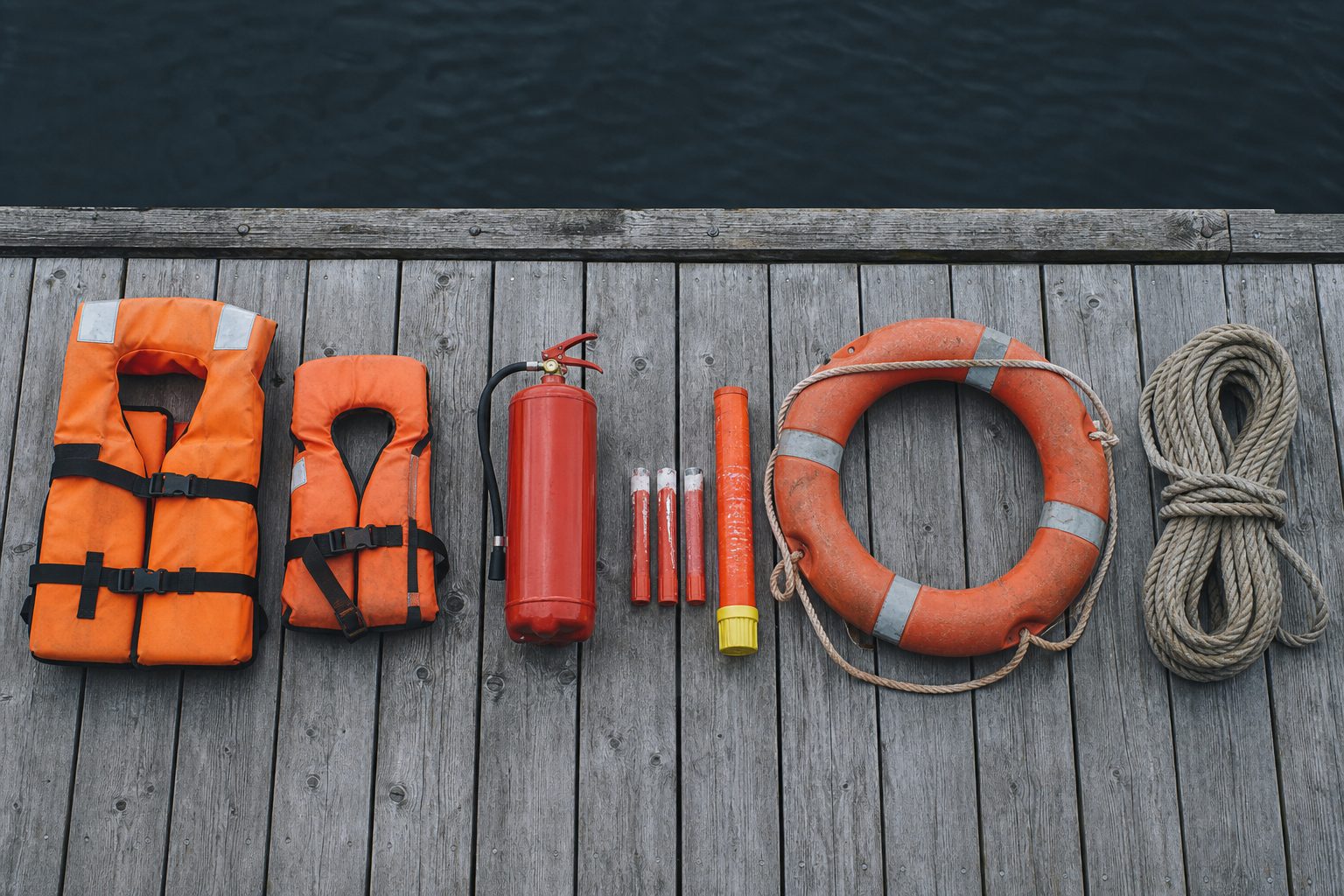
Life jackets, passenger sizing and the throwable
Before your trip, verify you have a wearable life jacket for every person on board, plus one throwable Type IV device. Life jackets should be readily accessible, not stowed under heavy gear or locked away. For children under thirteen, ensure you have the right sizes, adult vests do not fit small kids safely. Double-check that each jacket is Coast Guard approved and free from tears, broken buckles or rotted straps.
Keep the throwable device within arm's reach of the helm or cockpit, never buried beneath supplies. Many boarding officers begin their walk-through by asking to see every life jacket and the throwable. Have them ready for inspection without delay.
If you expect passengers who may need larger or smaller vests, plan ahead. Many operators carry at least one extra youth and one extra oversized jacket to cover surprises. If your trip includes non-swimmers or elderly guests, brief your crew and be ready to show these jackets as part of your safety talk.
Keep reading: Cost Per Charter Day: Building a Real Break Even for Your Boat
Visual distress signals and expiration dates
Uninspected passenger vessels must carry day and night visual distress signals in serviceable condition. This usually means three flares, but check your route, if you operate only on rivers or inland waters, requirements may differ. Many crews carry both pyrotechnic and non-pyrotechnic devices, such as orange smoke or signal flags.
Look for expiration dates stamped on each flare or handheld signal. Flares expire forty-two months after manufacture. Remove and replace any expired signals before leaving the dock. Boarding officers often inspect the flare box and check for out-of-date or damaged items.
Store signals in a dry, marked container that everyone aboard can locate. Make sure the box is not jammed or locked shut. In your pre-trip sweep, open the box and count. Check for moisture or broken seals, both of which can render a device useless.
In addition to required signals, some captains carry a waterproof flashlight or strobe as backup. These are not a substitute for pyrotechnic devices but can be helpful after dark or in heavy fog.
Fire extinguishers, mounting points and monthly checks
Most six-pack charter boats need at least one B-I (now 5-B) fire extinguisher. Larger vessels or those with enclosed engine spaces may need more. Extinguishers must be mounted in fixed brackets, not rolling loose on the deck or inside a tackle locker.
Inspect each unit before every trip. The pressure gauge should show green, the pin must be in place, and the nozzle clear. Look for rust, corrosion, or missing inspection tags. If your extinguisher is rechargeable, ensure the last service date is within the required interval. Disposable units follow their manufacture date, many are good for twelve years but check the label.
Monthly checks are a good habit. Record the date and initials on a tag or sticker, even if not strictly required. Boarding officers often ask who last checked the extinguishers and may expect to see a record.
If you operate with passengers in the cabin or galley, consider an extra unit within reach. Do not assume one extinguisher near the helm covers the entire vessel. In an emergency, speed and visibility matter.
Keep reading: What a Coast Guard Boarding of a Charter Boat Looks Like
Sound signaling, navigation lights and backup power
Every charter vessel must have a sound-producing device. A whistle or horn meets the rule, but it must be loud enough to be heard half a mile away. Many captains use an air horn as a backup in case the electric horn fails. Stow a spare canister or whistle in a marked location.
Test navigation lights before each trip, even in daylight. Check the anchor light, all-round white, and red-green sidelights. Clean lens covers and replace burned-out bulbs. If your boat uses fuses, keep spares on board.
For backup power, carry a charged flashlight at the helm. Some crews keep a headlamp or lantern as well. These are not substitutes for navigation lights but can help you signal or work in the dark if main power fails.
If you plan to be underway before sunrise or after sunset, recheck your lights as part of the float plan review. Do not rely on batteries that have not been tested recently.
Placards, waste plans and paperwork carried aboard
Federal law requires certain placards be displayed on uninspected passenger vessels. These include the oil discharge placard and, if over twenty-six feet, a garbage discharge placard. Mount each placard in a visible spot, usually near the galley, head, or engine compartment. Paper placards taped to a bulkhead will not pass muster; use a permanent, weather-resistant version.
If your vessel has a fixed marine sanitation device (MSD), you must carry a written waste management plan. Even with a portable toilet, many states recommend written instructions covering use and disposal. Keep the plan in a binder with your other vessel documents, not loose in a drawer.
Many captains keep a folder in a waterproof envelope containing the vessel registration, radio license (if required), and insurance certificate. Some states or marinas require additional permits. Check local rules before each season begins.
Boarding officers frequently ask to see these documents early in the inspection. If you cannot produce them promptly, your trip may be delayed or subject to fines.
See how TransomBooking handles this for charter fishing and marine tourism
Credential, medical certificate and drug program documents
As captain of a six-pack charter, you must carry your original Merchant Mariner Credential (MMC), a valid government-issued photo ID, and your current medical certificate. All documents must be unexpired and signed where required.
If you are enrolled in a random drug testing program (required under federal rules for commercial charter operators), keep proof of enrollment and the most recent negative test result on board. If you have crew, they must be enrolled as well. Boarding officers may ask to see the drug testing program letter and recent records.
Do not rely on digital copies alone. In most cases, paper originals or certified copies are the standard. Store these documents in a secure, dry spot. Some captains use a sealed pouch or lockbox near the helm.
If you operate in an area with local licensing or special training requirements, bring those credentials, too. Keep your paperwork organized and ready for inspection at any time.
The float plan: what goes in it and who holds it ashore
A float plan is a written record of your intended route, passenger list, departure and return times, and emergency contacts. It is not required by law, but many insurance companies and charter associations recommend it. Some marinas mandate a filed float plan for every departure.
Your float plan should include the boat's name and description, registration number, all crew and passenger names, and any special medical needs. Add your contact information and the best way to reach you on the water. Note your expected stops, fishing areas, or tour highlights.
Leave a copy with a responsible party ashore: the marina office, a family member, or your booking agent. Update the plan if your itinerary changes mid-trip. If you carry a satellite tracker or VHF radio, list the frequencies and device details.
Some operators combine their float plan with a pre-trip checklist. Others use a form provided by their booking software or association. The key is to keep it current and make sure someone on land knows exactly where you plan to be and when to expect your return.
The passenger safety briefing before the first line comes off
A thorough safety briefing is not just good practice: it is expected by the Coast Guard and most insurance carriers. Before leaving the dock, gather all passengers and crew on deck. Point out the location and use of life jackets, the throwable device, and the fire extinguisher.
Explain the function and location of visual distress signals, the sound signaling device, and the VHF radio. Demonstrate, if possible, how to use each device. Instruct passengers on safe movement around the boat and what to do in case of man overboard or emergency.
Cover the location of first aid supplies, emergency exits (if any), and the general rules for the trip. Remind passengers to inform you immediately of any illness, injury, or concern. If you have special rules about fishing equipment, seating, or restroom use, share them now.
End your briefing by confirming that the float plan is filed and that all required equipment is in place. If your trip is interrupted by weather or a last-minute schedule change, update the plan and repeat the briefing as needed.
For operators who want to streamline this process, booking tools are available that can generate custom float plans, track safety equipment requirements, and handle weather-related cancellations automatically. These tools help ensure nothing is missed before you get underway.
More from Charter Log
Read also
Cost Per Charter Day: Building a Real Break Even for Your Boat
Fuel burn at cruise, bait and ice, mate pay, slip fees, insurance, permits and a hull reserve. How to turn those line items into a defensible cost per trip and a floor price you will not undercut.
What a Coast Guard Boarding of a Charter Boat Looks Like
The blue light comes on, a small boat comes alongside and two officers step aboard with paying passengers watching. A walk through of what gets checked, in what order, and how the trip usually resumes.
How to Write a Charter Cancellation Policy That Survives a Chargeback
Deposits, captain's call weather rules and refund language decide who eats the loss when a front moves in. Here is how to build a policy clients agree to in writing and a processor will back in a dispute.